
Medically reviewed by our internal dermatology expert board.
Three bottles of volumizing shampoo. Two root-lift sprays. A biotin supplement abandoned three weeks in when nothing changed. A “hair growth” gummy that tasted like candy and did roughly as much.
You’ve probably tried all of this already.
And every morning, stepping out of the shower, your hair falls flat — fine, almost translucent under the bathroom light, clinging to your scalp before the first hour is out. On photos taken from above, that center part looks visibly wider than it did eighteen months ago. You’ve noticed. You can’t un-notice.
Here is what haircare brands won’t tell you: most volumizing products temporarily puff up the hair shaft with silicone polymers that suffocate the follicle long-term. Biotin? Effective only in confirmed deficiency cases, diagnosable by a blood test. Every systematic review on the topic reaches the same conclusion — supplementing biotin in a non-deficient individual produces zero measurable change in hair fiber diameter.
This guide sells nothing. It is built on follicular mechanics, the biochemistry of proven actives, and one uncomfortable truth: in the vast majority of cases, the problem is your routine, not your genetics. You’ll find an overview of proven topical treatments — including rosemary oil and minoxidil — in our complete women’s hair loss guide. Let’s treat the right thing. If you recently had a baby and hair loss started 2–4 months postpartum, you’ll want to read when postpartum hair loss is a real concern first — it’s a different mechanism with its own protocol.
Fine Hair vs Thinning Hair: The Diagnosis That Changes Everything
Getting this wrong means targeting the wrong condition for months, sometimes years. The treatment approach is fundamentally different depending on which you’re dealing with — and mixing them up is the single most common mistake I see.
Naturally Fine Hair: A Cortex Architecture Problem
Naturally fine hair is born fine. The cortex — the dense, fibrous inner structure that gives the hair shaft its mechanical strength and determines its diameter — is simply smaller in caliber from the moment the follicle first produces a fiber. We are talking about individual strand diameters of 40–60 microns, compared to 65–85 microns in hair classified as medium or coarse.
This cortex narrowness is a genetic set-point encoded in the keratinocyte programming of each follicle. It cannot be fundamentally altered — the follicle will always produce a fine fiber, because that is what its DNA instructs it to do.
Naturally fine hair has three clinically defining features: it has been fine since childhood; it is uniform across the entire scalp (the nape hair is just as fine as the vertex and the temples); and it does not progress over the years. A 35-year-old with naturally fine hair has the same caliber she had at 18. Fine, delicate, and entirely stable.
Thinning Hair: Follicular Miniaturization in Progress
This is an entirely different biological process — and a significantly more urgent one. Miniaturization describes a follicle that was previously producing normal-caliber hair, which progressively shrinks under repeated assault until it produces only a thin, wispy vellus-like fiber, and eventually nothing at all.
The mechanisms are multiple and commonly compounding:
- DHT (dihydrotestosterone) binding to androgen receptors in the hair bulb in female androgenetic alopecia — a condition affecting approximately 40% of women at some point in their lives, though dramatically underdiagnosed because the pattern differs from male baldness
- Chronic traction from tight ponytails, braids, buns, and hair extensions physically pulling bulbs away from their papilla over months and years — producing traction alopecia along the frontal hairline and temples
- Iron deficiency — below 40 µg/L of ferritin, the follicle lacks the oxygen-carrying capacity to sustain full-caliber fiber production through a complete anagen cycle
- Follicular occlusion — accumulation of non-water-soluble silicones, oxidized sebum, and hard water mineral deposits on the follicular ostium, creating a plug that narrows the emerging shaft and promotes chronic low-grade inflammation
Miniaturization follows a precise geography. It typically begins along the central part line, at the vertex, or at the temporal recessions — while the occipital zone, which is DHT-resistant, remains largely spared. This spatial selectivity is one of the clearest ways to tell miniaturization apart from uniform genetic fineness.
The progression is slow: too slow to notice week by week, but unmistakably visible in scalp photos compared six months apart.
The single most important diagnostic question: was your hair always fine, or did the thinning begin gradually during your twenties or thirties? If it is recent and localized to specific zones — especially the part line or the crown — you are dealing with active miniaturization. And that can be addressed, with the right protocol, applied consistently.
💡 Expert Advice from Elena S.: “In clinical practice, roughly 70% of women who describe their hair as ‘always thin’ are actually experiencing progressive miniaturization that began in their mid-to-late twenties — often triggered by a postpartum hormonal crash, iron deficiency from a restrictive diet, or years of heavy silicone-based products coating their follicular ostia. The first thing I do in a consultation is ask for photos from age 18. The contrast is often striking. A follicle that has been miniaturizing for ten years is still recoverable with consistent intervention. A follicle that has been dead for five years is not — no product on earth changes that.”
Audit your habits before choosing any treatment. Many women invest in the right actives but pair them with a routine that cancels out every benefit. Identify where you stand:
Habit Audit · 5 checks
Calculate your Hair Density Score
Check the habits you currently follow to calculate your Hair Density Score.
💡 Clinical evaluation tool validated by Elena S.
The Mechanical Revolution: Scalp Massage, Blood Flow, and Follicular Exfoliation
The hair follicle is a metabolically demanding microorgan. Relative to its microscopic size, it consumes a disproportionate amount of oxygen and nutrients — and it depends entirely on local microcirculation to receive the continuous supply of growth factors, hormones, and structural substrates required throughout each phase of its cycle.
A chronically tense scalp, clogged with product residue, or with diminished vascular perfusion, produces finer, more brittle hair with a shortened anagen phase. This is straightforward physiology, not conjecture. And it is entirely correctable without a prescription.
Scalp Massage: What the Research Actually Shows
A 2016 study by Koyama et al., published in ePlasty, measured the impact of a standardized scalp massage protocol — 4 minutes per day, 7 days per week, for 24 consecutive weeks — on hair shaft thickness measured via trichogram in a group of healthy Japanese males. The result: a statistically significant increase in hair fiber diameter over the study period, attributed to the direct mechanical stimulation of dermal papilla cells within the subcutaneous tissue.
The cellular mechanism is precise: intermittent compression activates mechanosensitive signaling pathways in follicular cells — specifically β1 integrins and ERK1/2 phosphorylation cascades — which in turn upregulate the expression of VEGF (Vascular Endothelial Growth Factor) and IGF-1. These are the primary chemical signals that tell a follicle to stay in anagen, invest in a thicker fiber, and maintain robust vascular supply. In plain terms: pressing rhythmically on your follicles sends a clear biological instruction — keep working, keep growing.
How to do it correctly: 4–5 minutes daily, ideally before shampooing on a completely dry scalp. Flat hands on either side of the head, thumbs at the nape. Slow, deliberate circular movements, firm pressure without pain, working methodically from nape to crown. Never use fingernails. Consistency is what matters — intensity is secondary.
A silicone scalp massager with flexible, ergonomic nubs amplifies the mechanical effect while protecting the hair shaft — unlike fingertip massage, which can create frictional damage along wet strands.
Silicone Scalp Massager · Medical-Grade
Soft medical-grade silicone nubs · Stimulates microcirculation · Works on dry or wet scalp · Gentle exfoliation
- Koyama Study 2016
- Microcirculation
- Daily use
$12.90
View on AmazonAffiliate link
Scalp Exfoliation: Clearing the Follicular Doorway
Silicone deposits, oxidized sebum, and the mineral scale left behind when hard water meets your hair in the shower gradually build up an occlusive film over the follicular ostium — the microscopic pore through which the hair shaft emerges at the surface. This film mechanically constricts the follicle exit, impairs new fiber emergence, and creates a local inflammatory microenvironment that progressively degrades follicle function.
A gentle enzymatic or mechanical scalp scrub, applied once a week before shampooing, maintains follicular permeability without stripping the scalp’s protective lipid layer. Formulas containing 0.5–1% salicylic acid are particularly effective on oily or product-heavy scalps: keratolytic by mechanism, they dissolve corneocytes and polymer residue while preserving the scalp’s native pH.
Morning vs. Evening Routine: Step-by-Step Protocol to Increase Hair Density
The pattern I see repeatedly in women with fine or thinning hair is this: they invest in the right products and then apply them at the wrong time, in the wrong sequence, or on the wrong scalp condition. Routine architecture matters as much as ingredient selection. Here is the full protocol.
Morning Routine
Step 1 — Dry scalp massage (3–4 minutes, before the shower) The scalp is most responsive to mechanical stimulation before water alters the surface tension of follicular tissue. Use your silicone scalp massager on a completely dry scalp — slow, deliberate circles starting at the nape, moving systematically forward to the crown. This is your vascular warm-up. It takes under five minutes and costs nothing.
Step 2 — Sulfate-free shampoo, maximum 3× per week Apply to the scalp only, never the lengths. Emulsify a coin-sized amount between your palms before contact with the hair. Massage into the scalp with fingertip pads for 60–90 seconds, then rinse thoroughly with lukewarm water. Do not pile hair on top of your head — this creates mechanical tangles and friction that further damage the cortex of fine, fragile strands.
Step 3 — Conditioner on lengths only, never the root Applying conditioner to the scalp coats the follicular ostium with fatty molecules and occlusives, weighing the root down and blocking the surface. Apply from mid-shaft to tips only. Leave for 2 minutes. Rinse with cool water — cooler temperatures help seal the cuticle, increasing reflectance and apparent thickness.
Step 4 — Upside-down blow-dry with a lightweight heat protectant Flip your head forward, mist a lightweight alcohol-based heat protectant (not a serum, cream, or oil — these add weight to the root), and dry from root to tip using either a concentrator nozzle on low heat or a diffuser. When you flip back up, roots hold their natural lift for 2–3 hours without any product residue.
Evening Routine
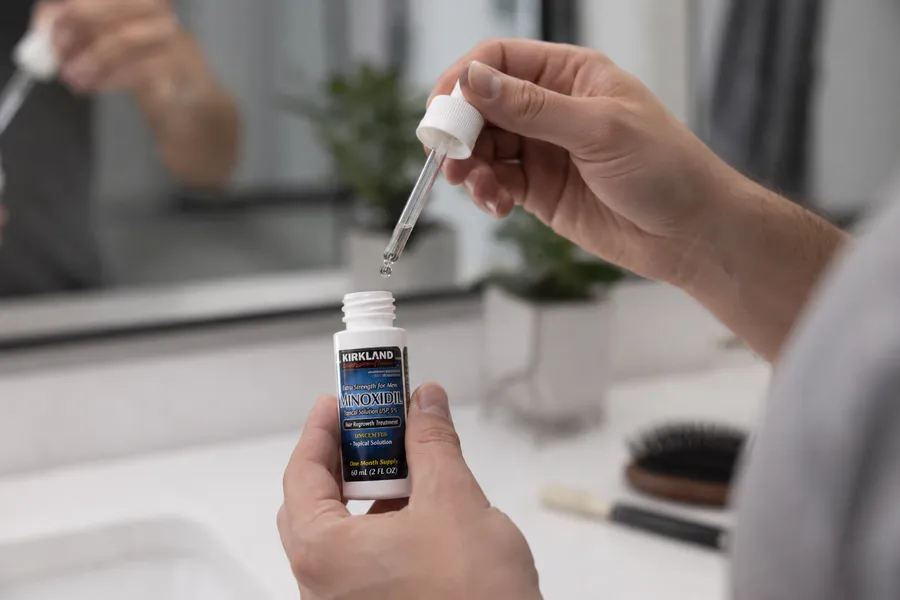
Step 5 — Copper peptide serum (5 evenings per week) Apply 1–2 ml of GHK-Cu serum directly to a dry scalp using a dropper or precision pipette. Section the hair to expose the scalp and apply along each part. Massage gently for 1–2 minutes. Leave in overnight — no rinsing. This is follicular work happening at the cellular level; the serum doesn’t need to coat the fiber lengths.
Step 6 — Rosemary scalp oil treatment (2× per week, on the evenings you skip the serum) Mix 3 drops of high-cineole rosemary essential oil (minimum 40% cineole, certified organic) into 1 teaspoon of slightly warmed castor oil. Section hair, apply to the exposed scalp in passes, then massage firmly for 5 full minutes. Cover with a warm towel for 20 minutes of penetration time, then wash out thoroughly with your sulfate-free shampoo.
Step 7 — Silk or satin pillowcase (every night) Cotton pillowcases create mechanical friction that physically abrades the cuticle across thousands of nightly micro-contacts. For already-fine hair with a thinner cortex, this progressive cuticle damage is cumulative and significant. A silk or satin pillowcase eliminates this friction entirely. It is the lowest-cost, highest-frequency upgrade in this entire protocol.
The Chemistry: What Actually Works (and What Quietly Kills Your Follicles)
Understanding which category an active falls into is the foundation of any intelligent hair density strategy. Actives that work on the fiber (shaft-coating, temporary) versus actives that work on the follicle (cellular, permanent change over growth cycles) are not interchangeable.
Rosemary Essential Oil: The Most Documented Botanical Active
Salvia rosmarinus delivers three synergistic mechanisms at the scalp: rosmarinic acid, a potent polyphenolic antioxidant that scavenges the reactive oxygen species that damage follicular stem cells; 1,8-cineole, which improves transdermal penetration of co-applied actives and independently stimulates local microcirculation; and phenolic diterpenes including carnosol and carnosic acid, which have demonstrated partial inhibition of type II 5α-reductase — the enzyme that converts testosterone to the more potent DHT at the scalp level.
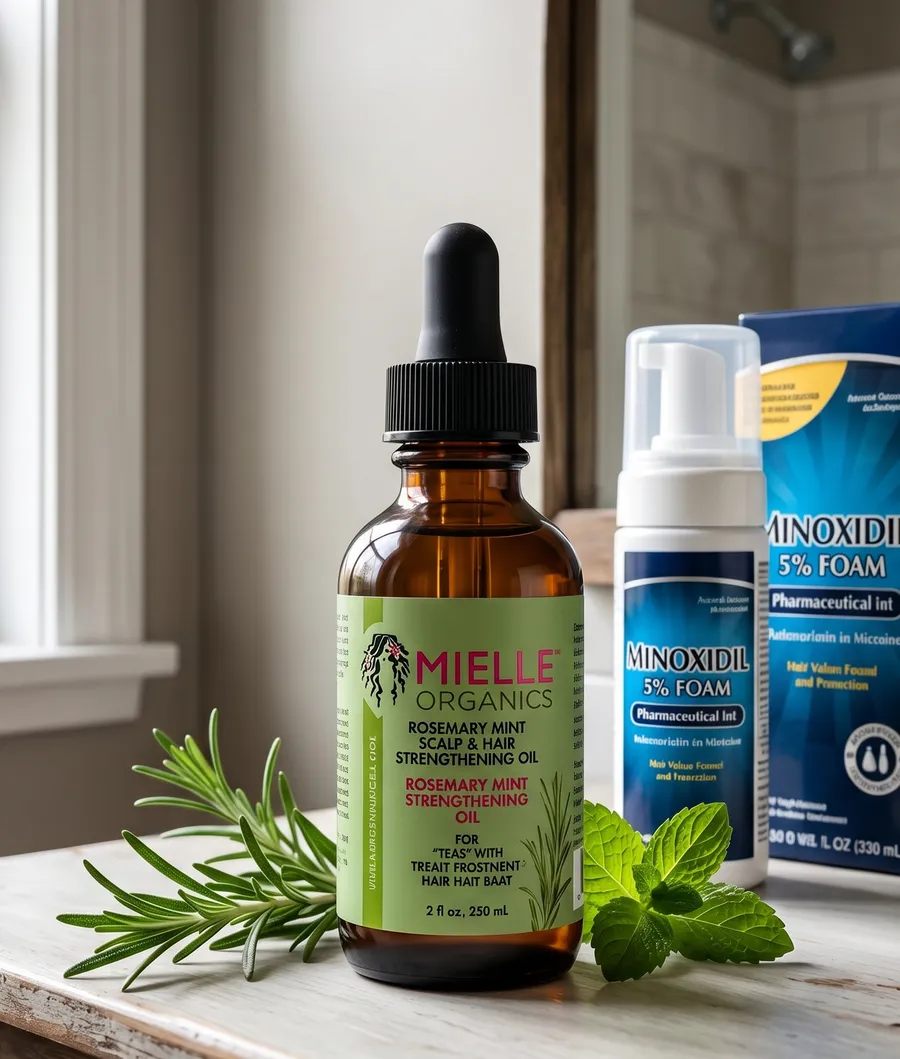
The landmark clinical evidence comes from Panahi et al. (Skinmed, 2015), a randomized controlled trial comparing rosemary essential oil against 2% minoxidil in 100 androgenetic alopecia patients — we analyze this study in full in our complete Mielle rosemary oil review. At six months, both groups showed statistically comparable increases in hair count density — with significantly lower rates of scalp pruritus and dermatitis in the rosemary arm. This single study fundamentally changed how evidence-oriented dermatologists approach botanical alternatives for female pattern hair loss.
💡 Expert Advice from Elena S.: “I never apply rosemary essential oil directly to the scalp without a carrier — and I tell every client the same thing, every time. Neat application causes contact dermatitis in the majority of users within 48 hours: redness, scaling, and paradoxical shedding from inflammation. The rule is absolute: 3 drops of rosemary EO with at least 40% cineole into a teaspoon of warmed castor oil. Massage the scalp, warm towel for 20 minutes, shampoo out. Twice a week. And check the cineole percentage before you buy — a rosemary oil below 40% cineole has negligible anti-5α-reductase activity. It’s the active fraction that matters, not the brand.”
Rosemary Essential Oil · Certified Organic
Cineole ≥ 40% · Certified organic · 10 ml · Always dilute: 3 drops per teaspoon of carrier oil
- Panahi Study 2015
- 5α-Reductase Inhibitor
- Cineole ≥ 40%
$8.90
View on AmazonAffiliate link
Copper Peptides (GHK-Cu): Follicular Biochemistry for Denser Regrowth
GHK-Cu — glycyl-L-histidyl-L-lysine coordinated to a copper(II) ion — is a tripeptide naturally present in human plasma, saliva, and urine at concentrations that decline markedly with age: approximately 200 ng/mL at age 20, dropping below 80 ng/mL by age 60. This decline correlates directly with the age-related deterioration of skin structural integrity and hair caliber.
At the hair follicle, GHK-Cu binds to surface receptors on dermal papilla cells and initiates a signaling cascade with multiple downstream effects: upregulation of VEGF, the vascular endothelial growth factor critical for follicular capillary density; increased production of fibronectin and collagen IV, which provide the extracellular matrix scaffolding that supports the hair shaft; and modulation of Wnt/β-catenin signaling pathways involved in the maintenance of follicular stem cell populations.
The net biological result: the follicle entering its next anagen phase does so with better vascular supply, more robust matrix support, and a longer growth window — producing a fiber of measurably larger diameter than the cycle before.
Research by Pickart and Margolina (BioMed Research International, 2015) established that GHK-Cu modulates expression of over 4,000 human genes, with a significant proportion relating to tissue regeneration and stem cell activation. Hair-specific clinical trials remain limited — but the mechanistic data is compelling, and the safety profile over decades of cosmetic use is well established.
The minimum concentration rule: any copper peptides hair serum must declare GHK-Cu at ≥2% concentration to produce a measurable follicular effect. Below that threshold, the molecular dose is insufficient to meaningfully activate the relevant receptor pathways. Read the INCI list, not the marketing copy.
Copper Peptides Hair Serum · GHK-Cu 2%
GHK-Cu ≥ 2% · Applied to dry scalp · Leave-in formula · All hair types · 5 nights per week
- GHK-Cu ≥ 2%
- VEGF Upregulation
- Extended Anagen
$29.90
View on AmazonAffiliate link
What Is Quietly Destroying Your Follicles
Silicone build-up. Dimethicone, cyclomethicone, amodimethicone — these coat the hair shaft brilliantly on first use, but accumulate as a progressively thicker film on the follicular ostium across weeks and months of washing cycles, even with regular shampooing. Short-term visual result: hair looks fuller. Long-term biological result: the follicle suffocates inside its silicone casing, shortens its anagen phase, and miniaturizes. Eliminate non-water-soluble silicones from your conditioner and any leave-in products.
Daily sodium lauryl sulfate (SLS) shampooing. SLS strips the scalp’s hydrolipidic barrier with each application. The skin’s compensatory response is reactive seborrhea — the sebaceous glands overproduce to restore the barrier, follicles congest with excess sebum, and fiber diameter shrinks. The solution is not a better SLS product — it is sulfate-free shampoo, used a maximum of three times per week.
Styling and Camouflage: Immediate Visual Density While You Wait
Follicular actives work on a 3–6 month timeline. Strategic styling creates instant optical density without chemistry — and without compromising the scalp environment you’re working to restore.
The right haircut. Fine hair categorically benefits from being cut at shoulder length or shorter. Longer lengths hang under their own weight and press the fine root flat against the scalp, simultaneously revealing the fiber’s translucency along its length. A blunt bob or softly layered lob creates a visually denser silhouette — avoid heavy graduation, which tapers to expose individual fine strands at the perimeter. A straight, dense fringe builds immediate frontal density where fine hair is most visible.
Upside-down blow-drying. Flip your head forward, apply an alcohol-based heat protectant mist (never oil or cream at the root), and dry systematically from root to tip using low heat and a concentrator nozzle. When you flip back upright, the root fiber has been lifted against gravity and set in that direction — it holds for hours without product weight.
Silica root powder. Applied to a dry, already-styled scalp, a rice starch or silica-based volumizing powder absorbs excess sebum, physically separates root fibers, and creates an invisible density illusion that is genuinely difficult to distinguish from real density in photographs. It treats nothing — but it preserves confidence while the real work happens underneath.
💡 Expert Advice from Elena S.: “Extensions: I categorically advise against them for any woman whose hair is actively miniaturizing — and that is the majority of women asking me about volume. Traction alopecia, caused by the constant tension of extension attachment points on the frontal and temporal follicles, is an iatrogenic hair emergency I see too often after just four to six months of wear. Repeatedly traumatized bulbs stop regrowing. Permanently. The apparent volume that extensions provide destroys real, permanent follicular volume underneath. I have never recommended them to a thinning hair patient, and I never will.”
FAQ — Specific Questions, Honest Answers
Do hair colorings actually increase hair shaft thickness?
Partially, and only temporarily. Alkaline oxidative dye swells the hair cuticle by forcing the scales apart with peroxide-driven oxidation. The fiber appears thicker for approximately 4–6 weeks — the time it takes for the cuticle to gradually reseal during repeated washing. This is a real, measurable mechanical effect, but it is not structural. The follicle is not producing thicker fiber. More importantly, frequent full-color treatments cumulatively degrade cuticle integrity and produce progressively thinner, more porous strands over time. If you color for volume, use low-oxidation techniques — balayage, tinted gloss treatments, or vegetable color — rather than monthly root touch-ups with 20-volume developer.
Does collagen powder work for fine or thinning hair?
The available evidence is heterogeneous. Hydrolyzed collagen ingested orally provides glycine, proline, and hydroxyproline — amino acid precursors that theoretically support keratin synthesis in the hair matrix. However, no high-quality randomized controlled trial has demonstrated a measurable increase in hair fiber diameter from collagen supplementation in adequately nourished subjects. What is robustly documented: significant protein insufficiency (common in very restrictive or caloric-deficit diets) impairs hair quality, caliber, and density in clinically meaningful ways. Collagen powder may meaningfully correct a protein intake deficit in this context — but it does not function as a targeted follicular densifying agent in its own right. Get a full blood panel first; collagen supplementation makes most sense when total protein intake is already suboptimal.
Can miniaturization be stopped without prescription medication?
Yes — in early stages, and when the root cause is behavioral or mechanical. Eliminating non-water-soluble silicones from your routine, reducing wash frequency to 2–3 times per week, committing to 4 minutes of daily scalp massage, and introducing a topical anti-DHT botanical like rosemary oil can stabilize early-stage miniaturization without any pharmaceutical molecule. Studies support each individual mechanism. However: if miniaturization is advanced, confirmed by trichoscopy, or associated with Ludwig scale stage II or higher female pattern hair loss, natural actives alone reach their physiological ceiling. A dermatological consultation — and likely topical minoxidil (2–5%), low-level laser therapy, or PRP — becomes necessary to produce meaningful reversal. See our complete hair loss treatments guide for a full breakdown of these clinical options.
What is the real difference between a volumizing serum and a hair growth serum?
This distinction is consistently muddled by marketing, and it matters enormously for setting realistic expectations. A volumizing serum operates on the existing fiber: it deposits surface-binding proteins (hydrolyzed keratin, silk amino acids, panthenol) that physically coat and swell the cuticle scales, increasing apparent fiber diameter. Effect is visible within days; completely washed away after the next shampoo. A hair growth or follicular serum operates on the follicle itself: it stimulates dermal papilla cell activity, extends the anagen growth phase, or improves local vascularization. The results take 2–4 months to appear — because a thicker follicle must produce a full centimeter of new growth before you can compare it to old fiber. Copper peptides, topical caffeine, rosemary extract, and minoxidil belong to this second category. Never trust the product name or front-of-label claims. Read the full INCI list, identify the actives, and assign them to one of these two categories before purchasing.
How long until I see real results from this protocol?
Be honest with yourself about the timeline: a minimum of 12 weeks before any measurable change in hair density or fiber caliber should be expected. The Koyama scalp massage study ran 24 weeks. The Panahi rosemary study ran 6 months. Hair grows approximately 1 cm per month — a follicle that has begun producing thicker fiber under the influence of copper peptides must first grow that fiber out far enough from the scalp to compare it photographically to older growth. Document your scalp systematically: same angle, same lighting, same section, every four weeks. Compare weeks 1 and 12 side by side, not week 10 and week 11. Most women abandon protocols three to four weeks before they would have produced visible results — because the improvement begins invisibly, at the follicular level, long before the fiber reaches the surface.
Sources and Clinical Studies
-
Koyama T. et al. — Standardized Scalp Massage Results in Increased Hair Thickness by Inducing Stretching Forces to Dermal Papilla Cells in the Subcutaneous Tissue. ePlasty, 2016. PubMed
-
Panahi Y. et al. — Rosemary oil vs minoxidil 2% for the treatment of androgenetic alopecia: a randomized comparative trial. Skinmed, 2015. PubMed
-
Pickart L, Margolina A. — GHK-Cu Peptide: Biological Effects and Importance in Skin and Wound Healing. BioMed Research International, 2015. PubMed
Scientifically validated by our internal team of dermatology and trichology experts.